
Tension and Trauma Release Exercises (TRE®) Benefits
How Humans Respond to Stress
Humans, like all animals, are wired for survival. At a biological level, we are constantly orienting toward safety and moving away from perceived threat. This response is not something we consciously choose, rather it arises spontaneously through the nervous system whenever danger is sensed.
While these responses are shared across species, what differs for humans is what we perceive as threatening. Stress is not only physical. Work, relationships, uncertainty, and even our own thoughts can activate the same survival responses in the body as immediate danger.
Over time, this can mean the body is repeatedly mobilised without the opportunity to fully settle again.
Psoas: The ‘Fight or Flight’ Muscle
When we feel under threat, the body initiates a cascade of physiological responses — stress hormones are released, heart rate increases, and blood flow is directed toward muscles that support action.
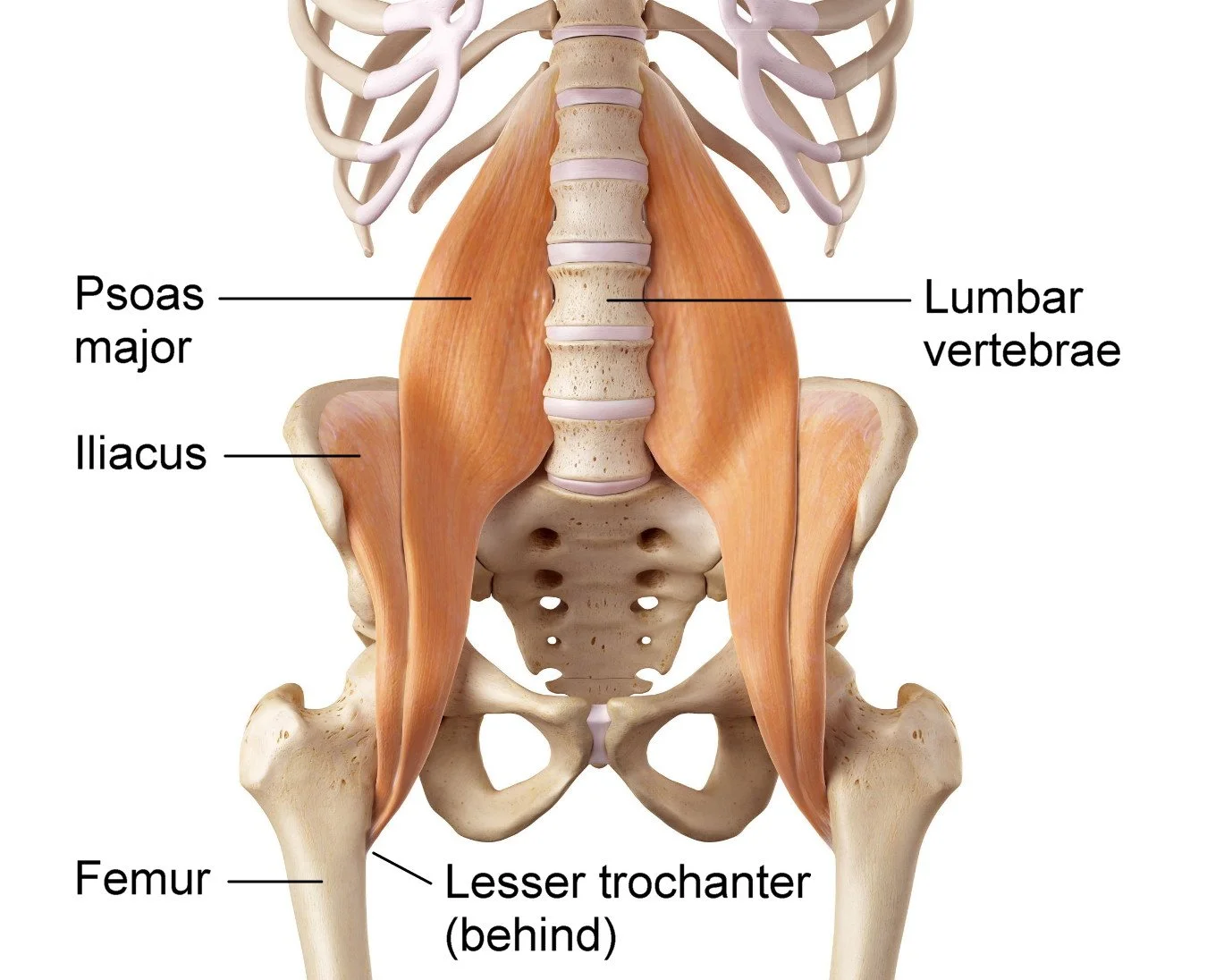
One of the key muscles involved in this response is the psoas. Located deep in the core, it connects the spine, pelvis, and legs, and plays an essential role in movement, stability, and protection.
In moments of danger, the psoas contracts to help the body curl inward — a protective reflex that shields the most vulnerable parts of the body. This is part of a deeply intelligent, instinctive response.
However, when the body does not have the opportunity to discharge the stress response, the psoas may remain partially contracted. Over time, this chronic holding can keep the system in a subtle but ongoing state of readiness, where even minor stressors can trigger disproportionate responses.
This can contribute not only to physical tension and pain, but also to patterns of anxiety, fatigue, and dysregulation within the nervous system.
The Stress Anxiety Loop
In a healthy cycle, once a threat has passed, the nervous system naturally moves back toward regulation. In animals, this often happens through spontaneous shaking or trembling, which helps discharge excess energy and signals to the brain that it is safe again.
Humans also have this capacity. However, due to conditioning, social inhibition, or ongoing stress, this natural discharge is often suppressed or interrupted.
When the stress response is not completed, the body can remain in a loop — the brain continues to register danger, and the body continues to respond accordingly. This creates a cycle of heightened alertness, where the system struggles to fully settle, even in the absence of immediate threat.
Shaking the Stress Away
Tremoring is one of the body’s natural ways of restoring balance. It is not something we need to make happen, but rather something we can allow.
When the body is supported to safely access this mechanism, it can begin to release accumulated tension held in the muscles and nervous system. This process helps complete the stress response and allows the organism to return to a state of greater ease and regulation.
Rather than something to control or fix, this is a process of listening to the body and trusting its innate intelligence.
Tension and Trauma Release Exercises (TRE®)
Developed by David Berceli, TRE® is a series of simple exercises designed to gently fatigue the body in a way that invites this natural tremoring response.
These exercises primarily target the deeper muscular structures, including the psoas, allowing the body to access and release long-held patterns of tension, stress, and trauma.
When practiced in a safe and supported environment, TRE® can help regulate the nervous system, restore a sense of grounding, and reconnect us with the body’s natural capacity for self-repair.
Rather than imposing change, it works by creating the conditions for the body to unwind itself.
Reported Benefits of TRE®
Deeper relaxation
Improved sleep
Reduced physical tension and pain
Greater emotional resilience
Reduced stress and anxiety
Improved core stability and posture
Increased energy and vitality
Enhanced body awareness and mindfulness
Faster recovery from stress
Greater ease in relationships